Rosaura Salazar
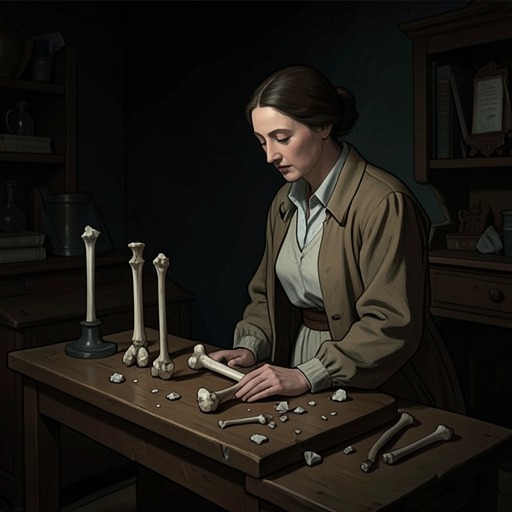
Legado en los huesosRosaura Salazar is Amaia Salazar’s sister, the capable manager of Mantecadas Salazar and a refuge for her family in times of upheaval. Her buoyant affection can soften even the strain of shared domestic life, but it does not erase the grief she carries or the childhood fear she kept secret: she once heard their mother threaten Amaia and responded by watching over her in silence.
Family Position and Work
After Víctor’s death unsettled the family, Flora Salazar moved to Zarautz, saying that her television baking programs required her to work there daily. She handed Rosaura the reins of Mantecadas Salazar. The transfer surprised Flora, but Rosaura proved to be an excellent manager, though she was initially overwhelmed by the responsibility. Her success gave her a substantial role in the family’s working life, not merely a place in its private circle.
Amaia offered help and spent many weekends in Elizondo with her sisters, but she gradually recognized that Rosaura no longer needed her support in running the bakery. She kept coming anyway: to share meals, stay at Engrasi Salazar’s house, and return to a place that had come to feel like home. Rosaura’s competence and Amaia’s continued visits thus belong together. The practical help became less necessary, while the family connection remained.
The bakery also appears as a place where family closeness meets public hostility. Amaia once arrived to find Rosaura painting over writing on the premises. She greeted Amaia with a kiss and welcomed her in for coffee, presenting an ordinary, affectionate face even as she dealt with the defacement. Later, James told Amaia that Rosaura had dismissed similar writing on a door as a prank, although it was an accusation of murder. Her response, as relayed by James, suggests that she had chosen to clean it away and minimize its meaning rather than let it define the encounter.
A Household of Shelter and Strain
Engrasi’s house serves as a refuge for Rosaura as well as for the wider family. After separating from Freddy, Rosaura had not returned to sleep at her own home. She went there often, but always came back to Engrasi’s. The distinction is telling: she could still visit the life she had left, yet the aunt’s house was where she could rest.
Amaia sees the cost of that period in Rosaura’s changed appearance. When Rosaura arrives at Engrasi’s wearing a woollen hat and removing layers against the cold, Amaia notices that she has lost considerable weight and that her smile has lost its brightness. Sadness and worry seem to have become so constant that Amaia can barely recall the last time Rosaura was truly happy. The strain includes her separation from Freddy and the death of Víctor; even the success of the bakery has not lifted it. Amaia also regards her sister as someone who feels life’s hurts acutely and might take a dangerous shortcut if circumstances became too hard. This is Amaia’s fearful assessment, not a stated intention on Rosaura’s part, but it shows how attentively she watches her sister.
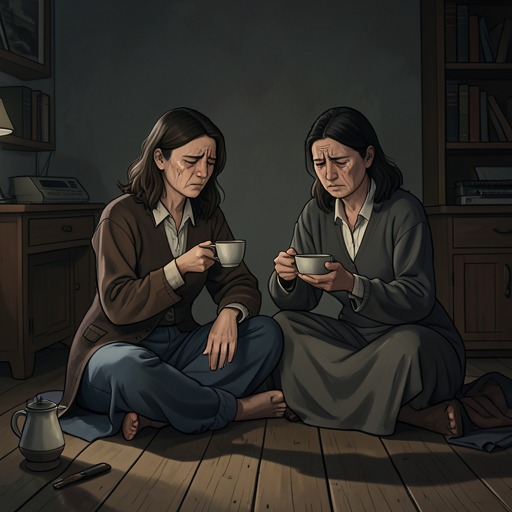
Their care for one another nevertheless retains humor and ease. When Amaia tells Rosaura to prepare for a night on duty because they will sleep at Engrasi’s, Rosaura protests that she already has plans. The sisters pretend to bicker over the arrangement, then laugh together. The exchange offers a counterpoint to Rosaura’s sadness: her family can still draw her into shared routines, teasing, and a sense of company.
Rosaura’s tenderness also appears in small details. Amaia notices pale marks on her nails and asks whether she has been painting; Rosaura says she has only been doing a couple of insignificant things at the bakery. The brief exchange places her creative distraction within the ordinary work of the shop, while Amaia’s attention to her hands shows how closely she reads her sister’s condition.
Marriage and Loyalty
Rosaura’s separation from Freddy follows his infidelity. In a conversation about what she had been to him, Freddy acknowledges that she loved and cared for him and had been faithful; he says she left after discovering that he was seeing Anne Arbizu. The revelation gives the separation a clear cause and resists any suggestion that Rosaura abandoned the relationship without reason. Her care for Freddy had been genuine, but it did not oblige her to remain with him after his betrayal.
The breakup is one part of a broader accumulation of losses and pressures. Amaia links Rosaura’s sadness not only to Freddy but also to Víctor’s death and to Rosaura’s deeply sensitive disposition. Yet Rosaura continues to manage the bakery and stays connected to her family. Her life is not reduced to the separation: it includes skilled work, visits to Engrasi’s house, and recurring moments of affection with Amaia.
The Warning and the Secret
Rosaura’s role in Amaia’s life includes a warning that returns through the novel’s repeated tarot imagery. A year before Engrasi lays out the cards again, Rosaura had performed a reading for Amaia. When the later spread repeats the earlier cards, Amaia recalls Rosaura’s warning that a dangerous enemy had already entered the scene and would keep drawing her attention until she accepted the enemy’s game. The repetition makes Rosaura’s reading part of the story’s pattern of foreboding, while also showing that she had once been the person who opened this unsettling conversation with her sister.
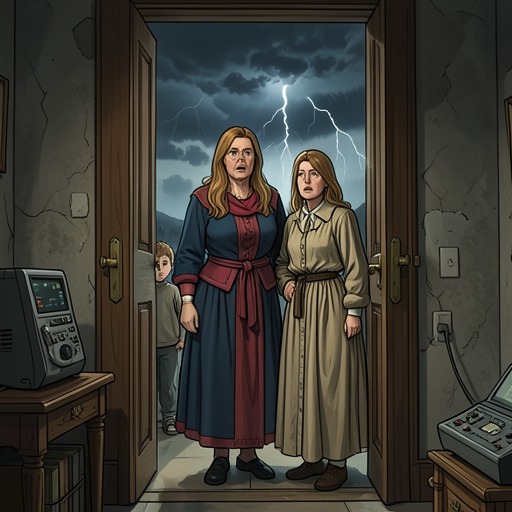
More consequentially, Rosaura eventually tells Amaia what she had known as a child. On one of many nights when Amaia insisted on sleeping beside her, Rosaura waited until Amaia was asleep and switched to her bed. Their mother came into the room, apparently mistook Rosaura for Amaia, and spoke close to her in a threat directed at the child she believed she was addressing. Rosaura was nearly asleep, but heard the words clearly. After their mother left, she got up and returned to Amaia’s side, frightened herself.
From that night onward, Rosaura let Amaia sleep with her. She also watched their mother watching Amaia, suspecting that their mother had noticed her vigilance. Rosaura had never told anyone what she heard. When she finally confesses, her voice trembles; she apologizes to Amaia for having kept silent. The disclosure recasts their childhood closeness as both affection and an improvised act of protection: Rosaura could not stop the threat, but she could remain beside her sister and keep watch.
Amaia tells Rosaura not to torment herself. She places responsibility on their father, who was the adult with the power and duty to defend her. The exchange gives Rosaura’s confession a difficult but important consequence: it brings a buried witness account into the open without making the child who heard the threat responsible for failing to prevent it.
Narrative Role
Rosaura is both a practical anchor and a crucial witness to the family’s past. The bakery shows her taking on responsibility and proving more capable than expected; Engrasi’s house shows her seeking shelter when her marriage has broken down; her confession reveals the fear beneath a childhood pattern of sharing a bed with Amaia. These strands complicate the image of a supportive sister. Rosaura’s care is not abstract: it takes the form of work, hospitality, companionship, and the decision to stay close when she is frightened too.
Her account also changes the meaning of Amaia’s memories. What might have seemed like a sister’s simple willingness to share a bed was, for Rosaura, a deliberate response to danger. By telling Amaia only after years of silence, Rosaura becomes the person who can finally name what happened and acknowledge what she did—and could not do—to protect her.